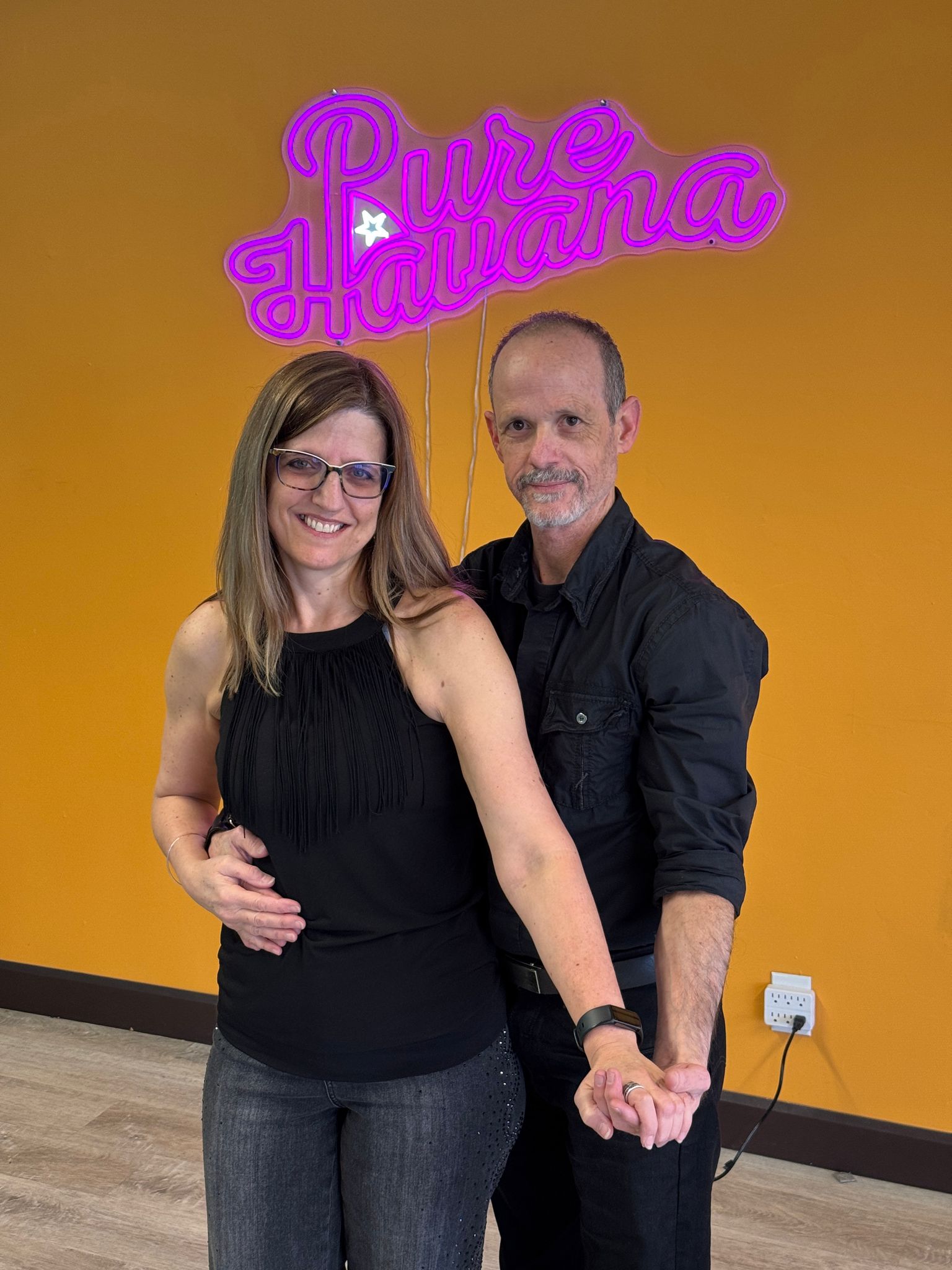

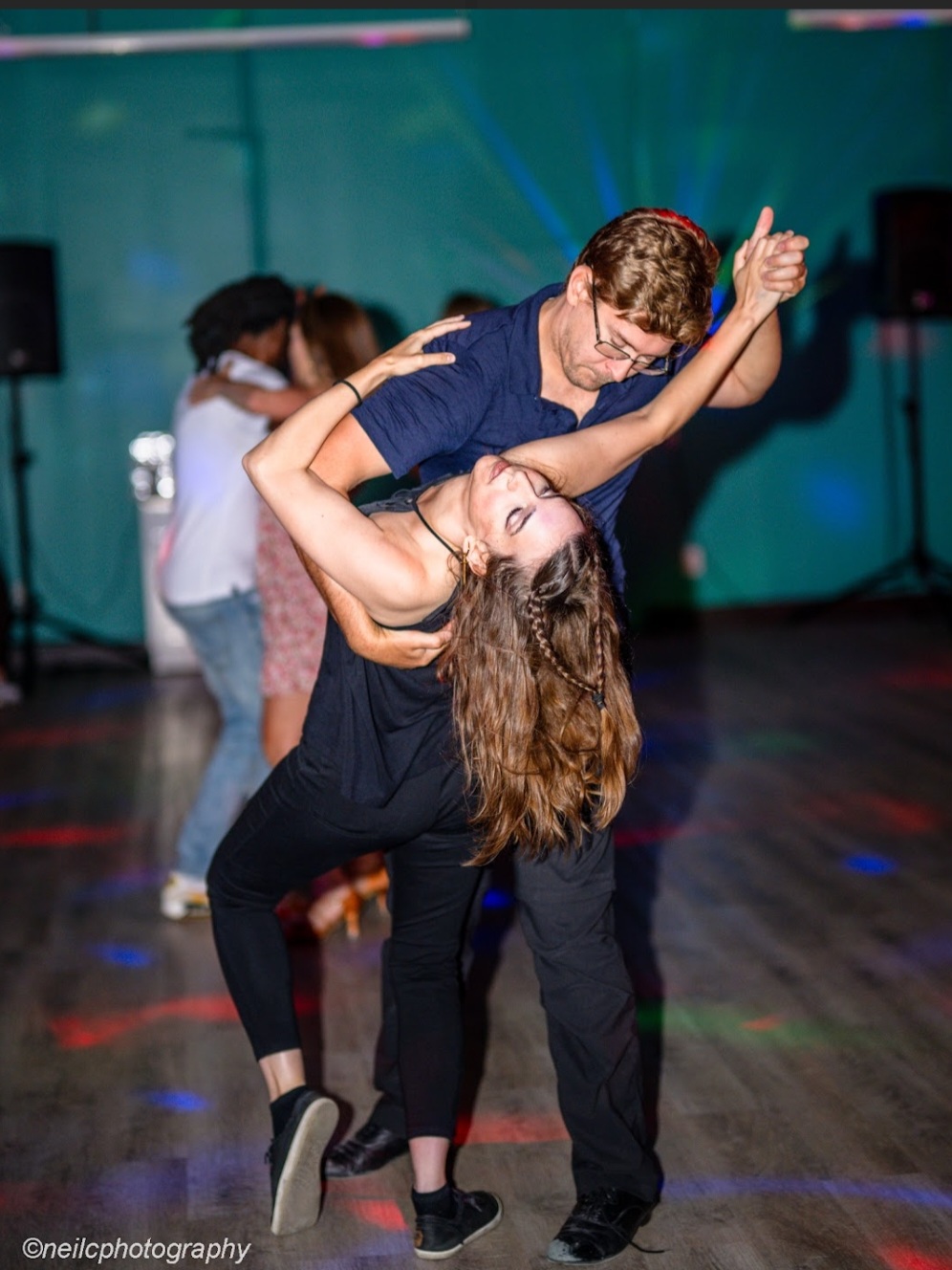
One of the biggest surprises for adults starting salsa is discovering that partner connection is not something that automatically happens once you learn the steps.
You can know where your feet are supposed to go.
You can understand the basic salsa count.
You can learn turns and several combinations.
But if you do not understand how to communicate with another person through movement, partner dancing can still feel confusing.
That is why I make connection an important part of my salsa teaching from the beginning.
When adults come to me from Gatineau, Kanata, Ottawa, Hull QC, Vanier, Centertown, Westboro, Rockcliffe, and Lansdowne, I do not want them simply memorizing what their feet should do.
I want them to understand what makes two people actually dance together.
For adults searching for salsa dancing near Kanata Ottawa, salsa dancing Ottawa for beginners, salsa dancing near me for beginners, or salsa dancing Ottawa adults, this can be one of the most important differences between knowing salsa movements and becoming comfortable with real partner dancing.
Strong partner connection is not about holding someone tightly.
It is not about forcing movements.
And it is not about memorizing exactly what your partner is going to do.
It is communication.
That communication is something I teach step by step.
Salsa Is a Conversation Between Two People
I like beginners to think about partner salsa as a conversation.
When two people have a good conversation, both are participating.
One person communicates.
The other responds.
Then the exchange continues.
Partner dancing works in a similar way.
The leader provides information through timing, direction, preparation, and connection.
The follower receives that information while maintaining their own rhythm, balance, and movement.
When both people understand their responsibilities, salsa begins feeling collaborative.
That is very different from one person trying to physically control the other.
I Build Individual Control Before Expecting Strong Partner Connection
Good partner connection starts with something that may seem unrelated:
Your own movement.
Before you can communicate comfortably with someone else, you need increasing control over yourself.
Can you maintain your basic?
Can you transfer your weight properly?
Can you stay balanced?
Can you hear the rhythm?
Can you complete a simple turn without depending on another person to hold you up?
These individual skills create the foundation for better partner work.
If both dancers are struggling to control their own movement, connection becomes much harder.
Timing Gives Both Partners a Shared Reference Point
Music is the third participant in every salsa dance.
Both dancers need a relationship with it.
A common beginner framework for salsa is:
1, 2, 3… 5, 6, 7.
When both partners understand the timing, they share a common structure.
The leader knows when movement is being initiated.
The follower has a rhythmic foundation from which to respond.
Turns and transitions have a clearer place.
Without that shared timing, even simple movements can feel uncertain.
That is why I do not treat musical timing as something separate from partner connection.
The two support each other.
I Do Not Want Followers Depending on Leaders for the Beat
A common misconception is that the leader handles everything.
That is not how I want students to learn.
Followers should develop their own relationship with the music.
I want them to hear the rhythm.
Maintain their own timing.
Control their own balance.
Then they can respond to the lead without becoming physically dependent on the leader.
This creates a much more comfortable dance for both people.
I Teach Leaders That Clear Does Not Mean Strong
New leaders often make a predictable mistake.
When a follower does not understand something, they increase the physical force.
Usually, that is not the solution.
More force does not automatically create more information.
I teach leaders to think about clarity instead.
Was the movement prepared properly?
Was the timing clear?
Was the direction understandable?
Was the connection consistent?
Was there enough time for the follower to respond?
These questions produce better leaders than simply trying to become physically stronger.
Comfortable Connection Should Not Feel Like a Wrestling Match
Salsa is partner dancing, but that does not mean either person should feel dragged around.
Connection should allow communication while both people maintain control of themselves.
When beginners become tense, they may grip too strongly.
That tension can travel through the partnership.
The leader becomes less sensitive to the follower.
The follower may become less responsive.
Movement begins feeling mechanical.
I help students understand that effective connection can still feel comfortable.
Relaxation Makes Communication Easier
This sounds simple, but it can take practice.
Beginners often carry tension in their:
shoulders,
arms,
hands,
neck,
and upper body.
Part of that comes from concentration.
They are trying so hard to do everything correctly that the body becomes rigid.
I help students notice that tension.
As they become more relaxed, connection often becomes easier to understand.
You can feel more information when you are not fighting against unnecessary stiffness.
I Teach Connection as Something Dynamic
Partner connection is not one fixed pressure that remains identical throughout an entire song.
The dance changes.
Movements change.
Direction changes.
Different situations require different communication.
I help beginners become sensitive to those changes instead of thinking they need to hold their partner in one rigid position.
That awareness becomes increasingly important as students progress.
Gatineau Beginners Often Want Skills They Can Use Socially
Adults coming from Gatineau may begin salsa because they want a social activity they can enjoy throughout the wider Ottawa Gatineau region.
That means partner connection matters enormously.
In a classroom, you may practice repeatedly with familiar people.
Socially, you may dance with someone you have never met.
Strong fundamentals help you adapt.
You do not need to know that person’s entire dance history.
You need to understand the shared language of timing, movement, and connection.
Kanata Beginners Benefit From Learning More Than Choreography
People searching for salsa dancing near Kanata Ottawa may be completely new to Latin dancing.
I want them learning skills that continue working beyond a single class routine.
If you only memorize choreography, you become dependent on your partner knowing exactly the same sequence.
If you understand connection, you gain much more flexibility.
You can dance with different people.
You can adapt.
You can communicate.
That is much closer to real social salsa.
I Teach Leaders to Prepare Movements
A good lead does not suddenly appear from nowhere.
Preparation matters.
The follower needs enough information to understand that something is changing.
This becomes particularly important with turns.
If a leader waits until the last possible moment and then tries to force a turn, the movement can feel rushed.
I teach leaders to understand the relationship between preparation, timing, and execution.
When those pieces work together, partner dancing becomes smoother.
I Help Followers Wait for Information
Followers face a different challenge.
Once they recognize a familiar movement, they may begin doing it before the leader has actually communicated it.
That is anticipation.
It happens frequently in beginner classes because students repeat the same pattern several times.
After enough repetition, the follower knows what is coming.
But social dancing is different.
I help followers become comfortable waiting for information instead of guessing.
This develops stronger responsiveness.
Following Is an Active Skill
Following is not passive.
A good follower is doing a lot.
Maintaining timing.
Managing balance.
Controlling movement.
Listening to the music.
Paying attention to connection.
Responding.
That is why I teach followers to take responsibility for their own dancing.
The leader communicates the direction of the partnership, but the follower remains an active dancer.
Leaders Need to Listen Too
Leading is not simply sending information.
Good leaders also pay attention to what comes back.
Did the follower understand?
Is the movement comfortable?
Is the timing working?
Is the connection becoming tense?
A leader who pays attention can adapt.
This is where salsa becomes a real conversation instead of a list of commands.
I Encourage Students to Experience Different Partners
One of the best ways to understand partner connection is to realize that every person feels slightly different.
People vary in:
height,
reach,
experience,
movement quality,
and comfort.
If you only dance with one person, you may begin responding to that person’s habits rather than developing adaptable skills.
Experiencing different partners can help both leaders and followers understand what clear communication actually feels like.
Different Partners Give Leaders Valuable Feedback
Imagine that a leader practices one movement repeatedly with the same follower.
Eventually, the follower may know exactly what is coming.
The pattern works perfectly.
Then the leader tries it with someone new and it does not work.
That can reveal something useful.
Maybe the original follower was anticipating.
Maybe the preparation was unclear.
Maybe the timing needs improvement.
Dancing with different people can reveal these details.
Different Partners Help Followers Stop Memorizing
The same applies to followers.
When you dance with different leaders, you cannot depend on one familiar style of communication.
You become more attentive.
You learn to maintain your own fundamentals while responding to different people.
This creates much stronger social dance skills.
I Teach Students to Adapt Without Losing Their Own Technique
Adaptability does not mean abandoning everything you learned.
It means using your fundamentals intelligently.
Your partner may be taller or shorter.
They may have more or less experience.
Their movement may feel different.
But you still maintain your timing.
You still control your balance.
You still use appropriate movement.
Strong fundamentals give you stability while you adapt.
Connection Begins Before a Complicated Move Ever Happens
Beginners sometimes think partner connection only matters during turns or patterns.
It begins much earlier.
How are you standing?
Are you balanced?
Are you comfortable?
Is the connection tense?
Are both people ready?
Are you moving with the same rhythm?
These simple details influence everything that happens later.
That is why I pay attention to them from the beginning.
I Teach Beginners Not to Rush the Start of a Dance
A song begins and beginners sometimes panic.
They feel they need to immediately start doing something.
There is no need.
Listen.
Find the rhythm.
Establish a comfortable connection.
Then begin.
A calm beginning gives both partners time to settle into the dance.
Partner Connection Becomes Easier When Steps Become Smaller
Large movements can make connection harder.
If one person travels too far, the partnership may become stretched.
Timing can become difficult.
Balance can be affected.
I encourage controlled step sizes because they help both dancers stay connected more comfortably.
This becomes particularly useful on social dance floors where space may be limited.
Balance Protects the Partnership
I want every student learning to control their own balance.
Your partner should not become the person responsible for keeping you upright.
This matters during basics.
It matters during turns.
It matters during transitions.
When both dancers control themselves, the connection can focus on communication instead of physical support.
Weight Transfer Supports Clearer Partner Movement
Weight transfer is another fundamental that directly affects connection.
If your weight is not where your partner expects it to be, movement can become confusing.
You may feel late.
You may hesitate.
You may become difficult to redirect.
That is why I spend time helping students understand where their body weight is throughout the dance.
Better weight transfer can improve partner communication without adding a single new pattern.
I Want Students to Feel the Difference Between Clarity and Tension
Sometimes beginners confuse tension with connection.
They think they need to hold more strongly to feel their partner.
I help them explore a more useful relationship.
Connection should give information.
Excessive tension can actually hide information.
When students begin recognizing this difference, their dancing can change significantly.
I Use Simple Movements to Teach Better Connection
We do not need advanced combinations to practice connection.
The basic itself can teach a lot.
Simple turns can teach a lot.
Direction changes can teach a lot.
I prefer working on connection inside movements students already understand.
That allows them to pay attention to the partnership rather than spending all their mental energy remembering complicated choreography.
Why Simple Salsa Can Create Better Partner Awareness
When the movement is simple, you have more attention available.
You can notice:
how your partner responds,
whether you are rushing,
whether your grip is too strong,
whether your balance is stable,
whether you are still connected to the music.
That awareness is extremely valuable.
Complexity can come later.
I Help Leaders Stop Collecting Moves
New leaders sometimes believe their job is to constantly entertain the follower with new patterns.
That creates pressure.
I tell them something different.
Your partner does not need you to demonstrate every movement you know.
Use what you understand.
Communicate it well.
Stay with the music.
Give the dance room to breathe.
That usually creates a much better experience.
I Help Followers Trust the Process
Followers sometimes become nervous when they do not recognize a movement.
But social salsa is not a test of how many patterns you can identify.
If the lead is clear and your fundamentals are strong, you can often respond without knowing the name of what is happening.
That realization can be incredibly freeing.
You stop thinking:
“Do I know this move?”
And start thinking:
“What information am I receiving?”
Mistakes Can Actually Teach Better Connection
When something goes wrong between partners, I do not automatically see it as a failure.
It gives us information.
Did the leader prepare clearly?
Did the follower anticipate?
Did someone lose timing?
Was the movement too large?
Did tension interfere?
Once we identify what happened, the mistake becomes useful.
I Do Not Want Couples Blaming Each Other
This is especially important when couples learn salsa together.
If a movement does not work, the easiest reaction is:
“You did it wrong.”
That does not help.
Partner dancing involves communication between two people.
Instead of blaming, I help couples identify what each person can improve.
Maybe the lead needs more clarity.
Maybe the follower anticipated.
Maybe both lost timing.
We solve the dance problem rather than turning it into a personal problem.
Couples Can Build a New Type of Communication Through Salsa
Learning salsa together can be an enjoyable experience for couples because it creates a new shared language.
One person communicates movement.
The other responds.
Then the roles continue developing.
You learn patience.
You learn awareness.
You learn to adjust.
Most importantly, you learn that good partner dancing requires cooperation.
You Do Not Need to Bring a Partner to Learn Partner Connection
This is an important point for adults who are considering beginner salsa.
You do not necessarily need to arrive with someone.
Learning with different partners can actually be very valuable.
It gives you experience adapting.
You discover how connection changes from person to person.
That can prepare you well for social dancing.
I Prepare Students for Real Social Salsa
Partner connection becomes especially important when students move from classes into social environments.
In class, everyone may be practicing the same concept.
At a social, that structure disappears.
You need to communicate without knowing exactly what your partner will do.
That is why I want students building transferable skills.
Timing.
Balance.
Connection.
Adaptability.
Recovery.
Those skills travel with you.
Social Dancing Is Where Connection Becomes Real
There is only so much we can simulate in class.
Social dancing introduces unpredictability.
Different songs.
Different partners.
Different levels of experience.
Different spaces.
That experience helps students understand connection at a deeper level.
You learn that communication matters more than memorization.
I Teach Students How to Recover Together
A mistake in partner dancing involves two people.
If something goes wrong, I do not want either person panicking.
Simplify.
Return to the basic.
Find the rhythm.
Reconnect.
Continue.
This shared recovery is one of the most useful skills a social dancing couple can develop.
A Good Partner Helps the Dance Continue
When something goes wrong, blaming or visibly becoming frustrated makes the experience worse.
I want students to develop generosity as dancers.
Help the partnership recover.
Smile.
Continue.
The goal is not to prove who made the mistake.
The goal is to keep enjoying the dance.
Social Confidence Grows When Connection Becomes Familiar
At first, dancing with someone unfamiliar can feel strange.
After more experience, you realize that the fundamentals remain consistent.
You know how to establish connection.
You know how to listen.
You know how to respond.
You know how to adjust.
That familiarity reduces anxiety.
Salsa Dancing Ottawa Adults Is About More Than Learning Steps
Adults searching for salsa dancing Ottawa adults often want something social.
That means connection is central to the experience.
Learning footwork is useful.
Learning turns is useful.
But the ability to share a dance comfortably with another person is what makes partner salsa special.
That is why I never want connection to become an afterthought.
Salsa Dancing Near Me for Beginners Should Teach Real Partner Skills
When someone searches for salsa dancing near me for beginners, they should not need prior knowledge of partner dancing.
Beginner instruction should explain it.
That includes:
how to stand,
how to connect,
how to maintain your own balance,
how to communicate,
how to respond,
and how to recover.
These skills make salsa much more approachable.
Gatineau Students Can Take Their Partner Skills Into the Wider Dance Community
Adults from Gatineau can use these fundamentals throughout the broader Ottawa Gatineau Latin dance community.
The partner changes.
The location changes.
The song changes.
But clear communication remains useful.
That is why I focus on principles that travel with you.
Kanata Students Can Build Toward Social Salsa With Confidence
Adults searching for salsa dancing near Kanata Ottawa may initially want lessons simply to learn something new.
Over time, many become curious about social dancing.
Strong partner connection makes that transition easier.
You are not walking onto the floor with only memorized choreography.
You understand how to communicate.
That creates much more confidence.
Hull QC Students Can Build the Same Transferable Foundation
Adults from Hull QC can begin with exactly the same fundamentals.
Timing.
Balance.
Weight transfer.
Connection.
Communication.
These skills do not belong to one neighborhood or one class.
They become part of your dancing.
Vanier Beginners Can Learn Connection Without Feeling Intimidated
Adults from Vanier Ottawa may feel nervous about partner dancing initially.
I make the process gradual.
We do not need complicated movements.
We begin with comfortable connection.
Then we build.
As familiarity increases, the nervousness usually decreases.
Centertown Adults Can Turn Partner Skills Into Social Confidence
For adults in Centertown Ottawa, salsa can become a genuine social hobby.
Strong partner skills help make that possible.
You become more comfortable asking people to dance.
You become more adaptable.
You stop worrying about whether every partner will move exactly like the people from class.
That is an important step toward social independence.
Westboro Beginners Can Focus on Quality of Connection
Adults from Westboro Ottawa may appreciate a learning process that prioritizes quality rather than the number of moves covered.
Good connection can make simple salsa feel enjoyable.
Poor connection can make complicated salsa uncomfortable.
That is why I would rather build the partnership correctly first.
Rockcliffe Students Can Refine the Details of Partner Communication
For adults from Rockcliffe Ottawa, partner connection can continue developing even after the basics feel comfortable.
Small refinements matter.
Timing.
Preparation.
Tension.
Positioning.
Awareness.
These details can transform the way familiar movements feel.
Lansdowne Adults Can Prepare for Social Dancing Gradually
Adults around Lansdowne Ottawa may want salsa as an active social outlet.
I help them build toward that experience rather than rushing.
Learn the fundamentals.
Develop connection.
Experience different partners.
Build confidence.
Then use those skills socially.
Salsa Dancing Ottawa Saturday Can Give Students Partner Experience
Adults interested in salsa dancing Ottawa Saturday may eventually want to use weekends to explore the social side of salsa.
Partner connection becomes especially valuable in those environments.
You cannot depend on everyone knowing the same routine.
You need communication.
That is what we prepare for.
Salsa Dancing Ottawa Wednesday Can Build More Adaptability
People searching for salsa dancing Ottawa Wednesday may be looking for another opportunity to practice and socialize.
More partner experience can help students become adaptable.
You begin understanding that every dance feels slightly different.
That becomes normal rather than intimidating.
Salsa Dancing City Hall Ottawa Can Inspire Beginners to Participate
People interested in salsa dancing City Hall Ottawa may see social dancers interacting naturally and wonder how they know what to do.
The answer is not necessarily memorized choreography.
Partner communication makes much of that spontaneity possible.
That is why I teach it early.
Free Salsa Ottawa Can Introduce Beginners to New Partners
Adults searching for free salsa Ottawa or free salsa dancing Ottawa may be exploring beginner-friendly community opportunities.
Those experiences become more enjoyable when you understand basic partner connection.
You can participate with greater awareness instead of feeling completely unsure about how partner salsa works.
A Latin Dance Club Ottawa Requires Adaptability
If your goal is eventually visiting a Latin dance club Ottawa, adaptability matters.
You may meet dancers you have never practiced with.
Your connection may feel different.
Your movement still needs to remain comfortable and controlled.
Strong partner fundamentals help you adjust without losing confidence.
Private Salsa Lessons Can Focus Directly on Partner Connection
Some students want more personalized help.
That is where private salsa lessons Ottawa can be especially useful.
We can look closely at:
timing,
hand connection,
body positioning,
lead preparation,
following response,
tension,
balance,
and transitions.
Individual attention can help identify small habits that are difficult to notice on your own.
Private Lessons Can Be Especially Helpful for Couples
Couples who want to learn together can use private instruction to focus specifically on their partnership.
Instead of learning only more moves, we can improve how the two of you communicate.
That often makes existing movements feel significantly better.
Private Coaching Can Help Social Dancers Refine Connection
Private lessons are not only for complete beginners.
A student may already attend socials but notice that certain movements frequently become unclear.
We can investigate why.
Sometimes a small adjustment in preparation or timing can create a noticeable improvement.
Bachata Can Expand Your Understanding of Partner Connection
Many salsa students eventually become interested in beginner bachata classes Ottawa or bachata classes Ottawa adults.
Bachata provides another partner dance experience.
The rhythm and movement quality differ from salsa, but connection, timing, balance, and communication remain important.
Learning both can help students become more aware partners.
I Want Students to Become Dancers People Enjoy Dancing With
This is one of my biggest goals.
Being a good social dancer is not about knowing the most impressive moves.
It is about creating a comfortable shared experience.
Are you on time?
Are you respectful?
Is your connection comfortable?
Can you adapt?
Can you recover without blaming your partner?
Do you pay attention?
These qualities matter.
How I Know Partner Connection Is Improving
I notice changes that have nothing to do with learning another combination.
Leaders stop forcing movements.
Followers stop guessing.
Both dancers stay balanced.
Timing becomes more consistent.
Hands become less tense.
Movements feel clearer.
Recovery becomes easier.
Students can dance with different people without everything falling apart.
Those are significant improvements.
Strong Connection Creates More Freedom
This may sound contradictory.
Structure creates freedom.
When you understand the fundamentals of partner communication, you no longer need every dance to follow a predetermined routine.
You can make choices.
You can adapt.
You can respond.
You can enjoy what is happening in the moment.
That is when social salsa becomes much more interesting.
Looking for Beginner Salsa Classes From Gatineau or Kanata?
If you have been searching for salsa dancing near Kanata Ottawa, salsa instruction from Gatineau, salsa dancing Ottawa for beginners, salsa dancing near me for beginners, salsa dancing Ottawa adults, or best salsa dancing Ottawa, I want you to know that learning the steps is only part of becoming a confident partner dancer.
Whether you are coming from Gatineau, Kanata, Hull QC, Vanier, Centertown, Westboro, Rockcliffe, Lansdowne, or elsewhere around Ottawa, I can help you develop the communication skills underneath the movement.
We can strengthen your timing.
We can improve balance and weight transfer.
We can make your connection more comfortable.
We can help leaders communicate without force.
We can help followers respond without guessing.
We can practice with different partners.
We can improve adaptability.
And we can prepare you to use those skills when you eventually step onto a social dance floor.
Because I do not want you to simply know what salsa steps look like.
I want you to understand how to connect with another person so that two individual dancers can move together, communicate through the music, and turn simple steps into a real shared dance.