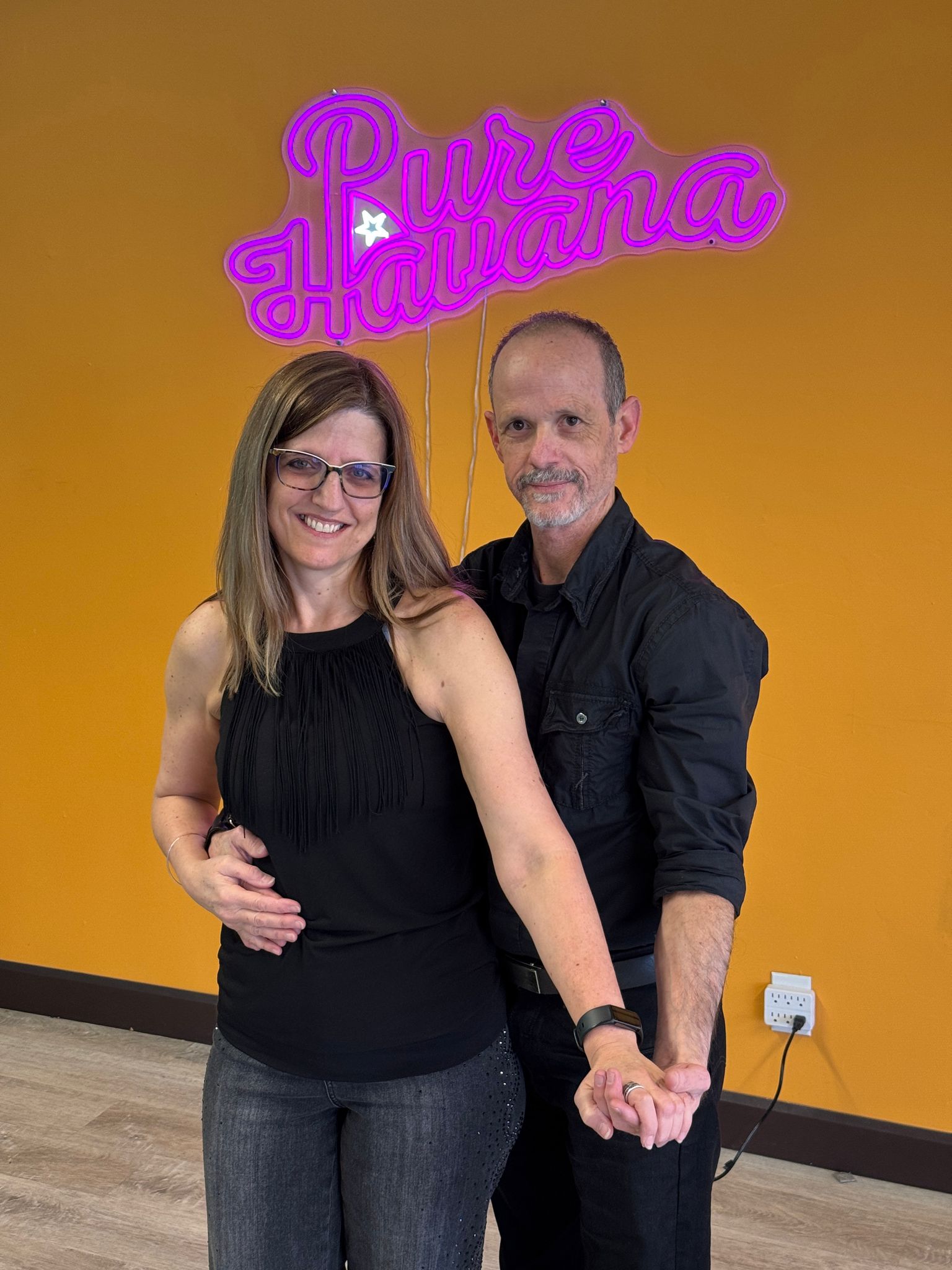

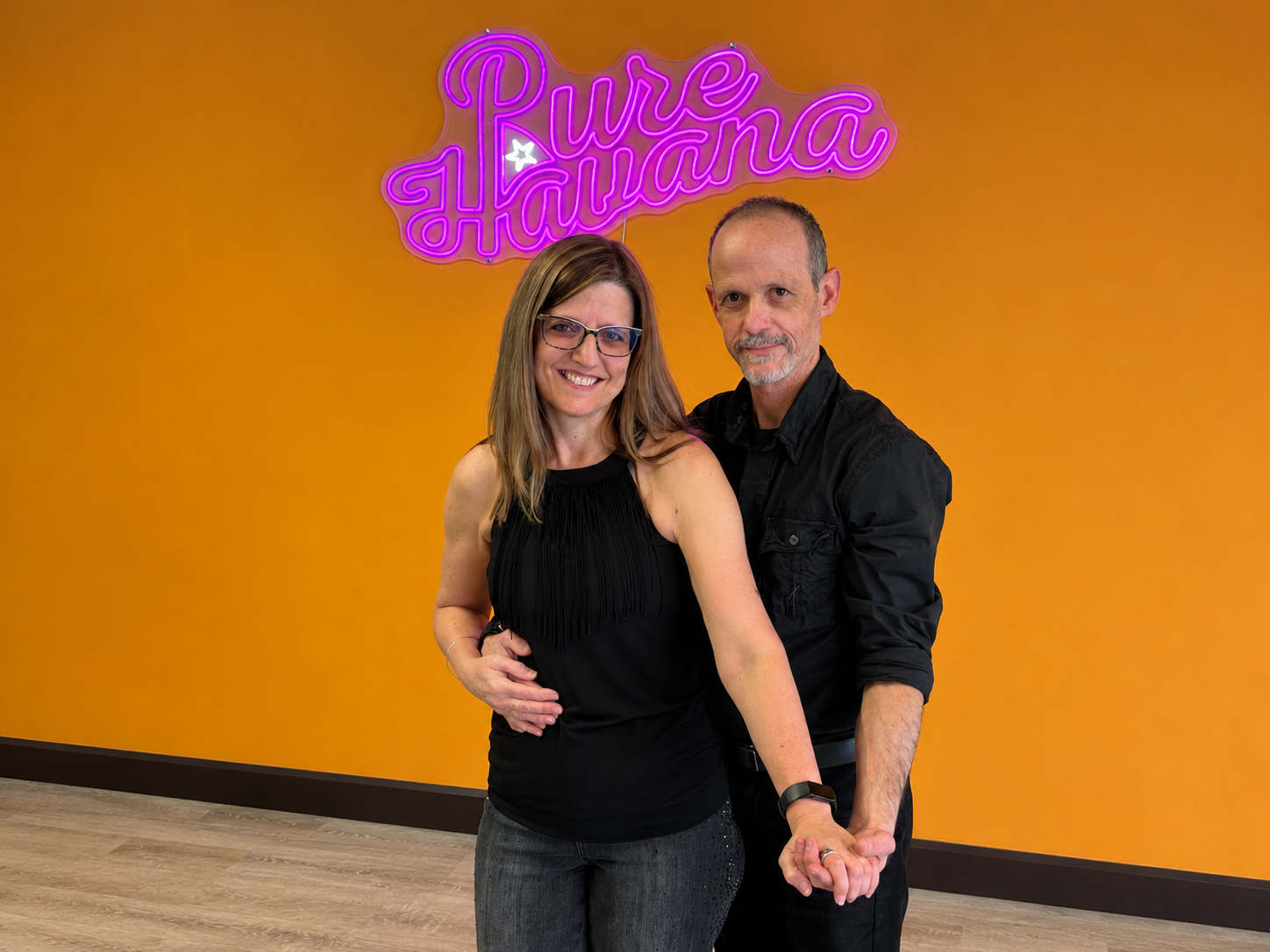
There is a big difference between knowing a few salsa steps and feeling confident enough to actually dance socially.
I see this transition all the time.
An adult begins taking salsa classes in Ottawa. They learn the basic rhythm, practice turns, become familiar with partner work, and gradually understand how salsa is structured. Inside the class, things begin feeling comfortable.
Then they imagine walking onto a social dance floor.
Suddenly, new questions appear.
What happens when nobody is telling me which move comes next?
What if I cannot find the beat?
What if my partner knows more than I do?
What if I forget everything halfway through the song?
What if I make a mistake?
These concerns are completely understandable. Social dancing asks you to use what you have learned in a much more independent environment.
That is why I do not teach beginner salsa as though completing a collection of classes is the final goal.
For adults coming to me from Ottawa, Rockcliffe, Vanier, Centertown, Westboro, Lansdowne, Kanata, Gatineau, and Hull QC, I want the skills we develop in class to eventually become skills you can use without depending on an instructor.
If you have been searching for salsa dancing Ottawa for beginners, salsa dancing Ottawa adults, salsa dancing near me for beginners, or best salsa dancing Ottawa, my approach is designed to help you do more than memorize steps.
I want to help you become comfortable enough to actually dance.
Beginner Classes Give Us the Tools
When someone first starts salsa, structure is incredibly useful.
I can demonstrate a movement.
We can practice it slowly.
We can repeat it.
I can correct details.
We can try again.
This creates a controlled environment where beginners can develop the individual pieces of salsa.
But social dancing is different.
Nobody stops the song because you missed a step.
Nobody announces the next movement.
You may dance with someone whose style feels slightly different from the people you practiced with in class.
The music may feel unfamiliar.
There may be other dancers around you.
That is why my beginner teaching gradually shifts from simply learning movements toward learning how to use those movements independently.
I Teach With Social Dancing in Mind From the Beginning
I do not wait until someone considers themselves an intermediate dancer before talking about social dancing.
The preparation begins much earlier.
When we work on timing, there is a social purpose behind it.
When we improve your basic, there is a social purpose behind it.
When we practice partner connection, there is a social purpose behind it.
When I encourage you to recover instead of stopping after a mistake, there is definitely a social purpose behind it.
I want every fundamental to answer a practical question:
How will this help you when you are dancing without me?
That question influences the way I teach.
The First Transition Is From Following Instructions to Making Decisions
In a beginner class, students naturally look to the instructor.
I demonstrate.
Students follow.
That is how learning begins.
Eventually, however, I want that dependence to decrease.
A social dancer needs to make decisions independently.
You need to hear the music.
You need to know where your weight is.
You need to communicate with your partner.
You need to choose movements.
You need to adjust when something unexpected happens.
For some adults, this is actually a bigger challenge than learning another turn.
I gradually create opportunities for students to make those decisions.
That is how classroom knowledge starts becoming real dancing.
I Help Students Build a Dance Vocabulary Instead of Memorizing Routines
One of the biggest changes I want beginners to make is moving away from the idea that salsa is a long routine.
Social salsa is not usually about memorizing an entire song from beginning to end.
Instead, I want students to develop a vocabulary.
Think about language.
You learn individual words and understand how they can be combined.
Salsa can develop in a similar way.
You have your basic.
You have turns.
You have transitions.
You have different directions.
You have partner communication.
Once those pieces become familiar, you can begin connecting them in different ways.
This is much more useful socially than memorizing one long sequence.
I Teach Beginners to Recognize What They Already Know
Students sometimes underestimate how much they can do because they are focused on what they have not learned yet.
They think:
“I only know a few moves.”
But a few movements can create many possibilities when you understand how to connect them.
You can use the basic between movements.
You can repeat something.
You can change the order.
You can take more time before beginning another pattern.
You can listen to the music instead of constantly searching for the next move.
Social confidence begins growing when students realize they already have enough material to start creating a dance.
Musical Independence Is a Major Part of Social Confidence
In class, I can count for you.
On a social dance floor, I will not be standing beside every couple counting.
That is why musical independence matters.
I help students gradually become better listeners.
At first, you may rely heavily on:
1, 2, 3… 5, 6, 7.
Then you begin recognizing that structure yourself.
Eventually, you hear a salsa song and feel increasingly comfortable finding where your movement belongs.
This process takes repetition, but it changes everything.
Once you trust yourself to find the rhythm, social dancing feels much less unpredictable.
I Encourage Students to Listen Before They Move
Beginners sometimes feel that the moment a song starts, they must immediately begin doing something.
There is no need to panic.
Listen.
Find the rhythm.
Allow yourself a moment to connect with the music.
Then begin.
That small habit can prevent a lot of unnecessary anxiety.
You do not get extra points for being the first person on the dance floor to start moving.
Understanding where you are in the music is far more valuable.
I Help Leaders Stop Planning Entire Songs
One of the biggest sources of anxiety for new leaders is the belief that they need to know exactly what they are going to do for the next three or four minutes.
They do not.
I teach leaders to think in smaller pieces.
Start with the basic.
Choose something familiar.
Complete it.
Reconnect.
Listen.
Then make another decision.
You only need to deal with the moment you are currently dancing.
That mindset makes social salsa much easier.
A Smaller Vocabulary Can Still Create an Enjoyable Dance
New leaders sometimes think confident social dancers must know hundreds of combinations.
That belief creates unnecessary pressure.
I would much rather see a beginner comfortably use a smaller vocabulary with good timing and clear communication.
You can repeat movements.
You can return to your basic.
You can change the order.
You can give your partner time to breathe.
A dance does not become enjoyable simply because it contains more patterns.
Comfort, music, connection, and communication matter enormously.
I Help Followers Become Comfortable With Uncertainty
Followers experience a different challenge.
In class, you may practice the same pattern repeatedly.
After several repetitions, you know exactly what is coming.
Socially, you do not.
That uncertainty is part of partner dancing.
I help followers become comfortable maintaining their own timing, balance, and movement while responding to what is actually being communicated.
You do not need to know the next movement in advance.
In fact, trying to predict everything can make following harder.
Confidence comes from trusting your fundamentals and responding in the moment.
Social Dancing Teaches Adaptability
Every partner is different.
That is one of the most valuable things social dancing teaches.
People have different heights.
Different movement qualities.
Different levels of experience.
Different ways of communicating.
Different musical preferences.
Your goal is not to make every partner feel identical.
Your goal is to become adaptable enough that these differences do not completely disrupt your dancing.
That adaptability develops through experience.
I Prepare Students to Dance With More Than One Familiar Partner
If you always practice with exactly the same person, you can become very good at understanding that person’s habits.
That is useful, but it is not the same as becoming adaptable.
When appropriate, experiencing different partners can help you understand whether your fundamentals are truly working.
Leaders learn whether their communication is clear.
Followers learn whether they are responding instead of memorizing.
Both develop greater awareness.
This can be an important bridge between beginner salsa classes and social dancing.
I Help Students Get Comfortable With Imperfect Dances
Your first social dances probably will not feel perfect.
They are not supposed to.
Maybe you lose the timing for a few seconds.
Maybe you forget a movement.
Maybe your partner misunderstands something.
Maybe you feel nervous.
Maybe the song seems faster than the ones you practiced with.
That experience still counts.
Every social dance gives you information that a classroom cannot completely reproduce.
You discover what feels natural.
You discover what disappears under pressure.
You discover which fundamentals need more attention.
Then we can use that information to improve.
I Teach Students How to Simplify Under Pressure
When beginners become nervous, they often try to do more.
That usually makes things harder.
Instead, I teach simplification.
If the dance begins feeling chaotic, reduce the complexity.
Use your basic.
Control your movement.
Reconnect with the music.
Give yourself time.
Then continue.
This is not a sign that you have failed.
It is a practical social dancing skill.
I Help Students Develop Floor Awareness
Social dancing does not happen in an empty classroom.
There may be couples around you.
Space can change throughout the song.
That means you need awareness beyond your own feet.
I encourage students to become increasingly conscious of their surroundings.
For leaders especially, this means considering where movements are being directed and how much space is available.
You do not need enormous movements to create an enjoyable dance.
Control becomes increasingly important as the floor becomes busier.
Good Social Dancing Includes Respect for Shared Space
Confidence should never mean ignoring everyone else.
A good social dancer is aware.
Aware of their partner.
Aware of the music.
Aware of their own movement.
Aware of the people around them.
This is another reason I emphasize controlled steps and good balance in beginner instruction.
Those fundamentals eventually support safer and more comfortable social dancing.
I Talk About Social Dance Etiquette
Learning the steps is only one part of joining a dance community.
Social etiquette matters too.
I want students to understand that partner dancing should feel respectful and comfortable.
That includes how you ask someone to dance, how you respond when someone declines, how you manage connection, how you treat different partners, and how you behave when something goes wrong.
A confident social dancer is not simply someone who knows many movements.
It is someone other people feel comfortable dancing with.
You Do Not Have to Say Yes to Every Dance
Confidence also includes having boundaries.
Social dancing should remain enjoyable.
You can choose whether you want to dance.
A polite invitation is not an obligation.
Likewise, if someone declines an invitation, that should be accepted respectfully.
Understanding this removes some of the pressure people associate with social dance environments.
I Help Adults Overcome the Fear of Being Watched
This is a big one.
Many adults believe everyone will notice their mistakes.
They imagine stepping onto the dance floor and immediately becoming the centre of attention.
In reality, people are usually much more focused on their own dancing and their own partners.
I remind students that social dancing is participation, not an audition.
You do not need to impress the room.
You need to connect with your partner, listen to the music, and enjoy the experience.
That change in perspective can make a huge difference.
Confidence Often Arrives After Participation, Not Before It
Some beginners wait for the day when they suddenly feel completely ready.
That day may never arrive if you never test what you have learned.
Social confidence often develops after you begin participating.
Your first dance makes the second easier.
Your second makes the third more familiar.
The environment becomes less mysterious.
You begin recognizing people.
You understand how the evening works.
The music sounds more familiar.
Experience gradually replaces imagination.
Why Ottawa Adults Often Want Salsa to Become More Than a Class
Adults searching for salsa dancing Ottawa adults are often looking for more than exercise.
They want an experience.
They want music.
Connection.
A new skill.
A reason to get out.
A social activity that feels different from the usual routine.
That is why I think helping students move toward social dancing is so important.
The classroom gives you the tools.
The social environment gives those tools a purpose.
Why Rockcliffe Beginners Benefit From a Gradual Transition
Adults from Rockcliffe Ottawa may arrive with no social dance experience whatsoever.
There is no need to rush them onto a dance floor before they understand what they are doing.
I prefer gradual preparation.
First, we build musical awareness.
Then movement becomes more reliable.
Partner communication improves.
Students begin making more independent decisions.
Then social dancing starts feeling like the next logical step instead of a huge leap.
That progression helps reduce unnecessary pressure.
Vanier Students Can Develop Confidence Through Familiarity
Adults from Vanier Ottawa may initially find partner dancing unfamiliar.
But familiarity changes the experience.
The music becomes recognizable.
The basic becomes automatic.
Partner connection becomes less strange.
Movements that once required intense concentration become easier.
This creates more mental space for enjoying the dance itself.
That is one of the transformations I love seeing in beginner students.
Centertown Adults Can Turn Salsa Into a Genuine Social Hobby
For adults around Centertown Ottawa, salsa can become much more than a weekly lesson.
Once you develop enough confidence to dance socially, the skill begins opening new experiences.
Instead of watching other people dance, you participate.
Instead of wondering whether you could learn, you know you are learning.
Instead of treating salsa as something other people do, it becomes part of your own social life.
That shift can be incredibly rewarding.
Westboro Students Can Build Confidence Through Consistent Exposure
Adults from Westboro Ottawa do not need to rush their progression.
Consistency is more important.
Every class makes the music more familiar.
Every practice session strengthens movement.
Every new partner develops adaptability.
Every social experience reduces uncertainty.
Eventually, the environment that once seemed intimidating becomes much more normal.
Lansdowne Beginners Can Work Toward an Active Social Outlet
For adults around Lansdowne Ottawa, salsa can provide an active way to socialize.
You are not simply attending an event.
You have something to do.
You are listening, moving, communicating, and participating.
That can be particularly appealing to adults who want a social activity with more interaction and purpose.
Kanata Adults Can Build Social Salsa Skills Gradually
People searching for salsa dancing near Kanata Ottawa may wonder whether they need to become advanced before participating socially.
I do not believe that is necessary.
You need enough foundation to participate comfortably.
That is different from being advanced.
If you can understand the basic rhythm, maintain your movement, communicate respectfully with a partner, use a small vocabulary, and recover when necessary, you already have valuable tools.
Then social experience helps develop the rest.
Gatineau and Hull QC Students Can Become Part of the Wider Dance Community
Adults coming from Gatineau and Hull QC can also build toward social dancing across the wider Ottawa Gatineau area.
One of the strengths of developing solid fundamentals is that those skills are portable.
The music may change.
The partner changes.
The location changes.
But timing, balance, connection, awareness, and adaptability remain useful.
This is why I want students to develop skills rather than memorize one classroom routine.
Salsa Dancing Ottawa Saturday Can Become Something You Actually Join
Beginners searching for salsa dancing Ottawa Saturday may initially be looking for somewhere to watch, learn, or experience salsa.
My goal is to help students reach the point where a Saturday salsa opportunity no longer feels like something meant for other people.
You can participate too.
Your first dances can be simple.
There is nothing wrong with that.
Use what you know.
Pay attention to your partner.
Listen to the music.
The experience itself becomes part of your education.
Salsa Dancing Ottawa Wednesday Can Help Students Gain More Experience
People also search for salsa dancing Ottawa Wednesday when looking for midweek opportunities.
For someone developing social confidence, having opportunities to experience salsa outside a formal lesson can reinforce learning in a different way.
You begin discovering how your skills respond when there is no instructor directing every moment.
That independence is valuable.
Salsa Dancing City Hall Ottawa Can Inspire the Move From Watching to Participating
Searches for salsa dancing City Hall Ottawa often reflect an interest in the public and social side of salsa.
Watching a lively dance environment can be exciting, especially when you are beginning.
But there is an even better feeling.
Participating.
You do not need to become the most advanced dancer there.
You simply need enough confidence to take your first steps into the experience.
That is what I want beginner training to prepare you for.
Free Salsa Ottawa Searches Can Be the Beginning of a Bigger Journey
People searching for free salsa Ottawa or free salsa dancing Ottawa may simply be curious.
They may want to see what salsa feels like.
They may want to experience the community.
That curiosity can become the beginning of something much bigger.
Once you learn the fundamentals, social opportunities become more meaningful because you are able to participate rather than only observe.
A Latin Dance Club Ottawa Becomes Less Intimidating With Experience
The words Latin dance club Ottawa can sound intimidating to a beginner.
You may picture experienced dancers performing complicated movements everywhere.
But once you understand the fundamentals, you begin seeing the environment differently.
You recognize the basic rhythm.
You notice familiar movements.
You understand partner communication.
The dance floor stops looking like complete chaos.
It begins looking like something you understand.
I Encourage Students to Set Social Goals
A useful way to build confidence is to make the goal specific.
Instead of saying:
“I want to become good at salsa.”
Try something measurable.
“I want to attend my first social.”
“I want to dance three songs.”
“I want to ask someone new to dance.”
“I want to complete a song without stopping after a mistake.”
“I want to feel comfortable dancing with someone I have not practiced with before.”
These goals create visible milestones.
Your First Social Does Not Need to Be an All Night Event
Another misconception is that attending a social means you need to dance for hours.
You do not.
Your first experience can be short.
Observe.
Listen.
Dance one song.
Dance another if you feel comfortable.
Allow yourself to become familiar with the environment.
You can build from there.
Removing the pressure to have a perfect first night often makes taking that first step much easier.
I Encourage Students to Reflect After Social Dancing
A social gives you valuable feedback.
Afterward, I encourage students to think about what happened without judging themselves harshly.
What felt comfortable?
Where did you lose timing?
Which movements were easy to remember?
Did you feel tense with unfamiliar partners?
Did faster songs create problems?
Were you able to recover?
Those observations tell us what to work on next.
Social dancing therefore becomes part of the learning process rather than something separate from it.
Returning to Class After Social Dancing Changes the Way You Learn
Something interesting happens after students begin dancing socially.
Class material starts having more context.
When I explain partner communication, you remember situations where it mattered.
When we work on timing, you understand why finding the beat independently is important.
When we practice a transition, you can imagine where you might use it.
The student becomes more active in their own learning because they now understand the practical purpose behind the technique.
Private Salsa Lessons Can Help Bridge the Gap
Some students feel comfortable in group classes but struggle to make the transition into social dancing.
That is where private salsa lessons Ottawa can be useful.
Individual instruction gives us an opportunity to identify exactly what is creating hesitation.
Maybe you know enough movements but do not trust your timing.
Maybe you struggle to connect movements without an instructor.
Maybe leading unfamiliar partners feels stressful.
Maybe you freeze when something unexpected happens.
We can focus directly on that obstacle.
Private Lessons Can Simulate Social Decision Making
Personalized training does not have to mean learning more complicated moves.
Sometimes I use that time to help a student become more independent.
Instead of telling you exactly what comes next, I can ask you to make decisions.
We can practice starting a dance.
Connecting simple movements.
Recovering.
Adjusting.
Listening.
These skills can be far more useful for social confidence than another long combination.
Bachata Can Expand Your Social Dance Experience
Once salsa students become comfortable socially, many become interested in beginner bachata classes Ottawa, bachata classes Ottawa adults, or best bachata classes Ottawa.
Learning bachata can expand your options in Latin dance environments.
The musical structure and movement feel different from salsa, which gives you another way to develop rhythm, connection, and partner awareness.
You do not have to choose one dance forever.
For many students, salsa becomes the beginning of a much broader interest in Latin dancing.
Social Confidence Is Not the Same as Being Advanced
This distinction matters.
You can be a beginner and still become socially confident.
Confidence does not mean knowing every movement.
It means understanding what you know well enough to use it.
You can hear the music.
You can maintain your basic.
You can communicate.
You can adapt.
You can recover.
You can treat your partner respectfully.
Those qualities can make a beginner enjoyable to dance with.
I Want Students to Stop Measuring Themselves Against Experienced Dancers
When you see someone who has been dancing for years, it is easy to compare your beginning to their current ability.
That comparison is not useful.
They have accumulated experience.
You are building yours.
Instead of asking whether you look like an advanced dancer, ask:
Am I more comfortable than I was last month?
Can I hear the music more clearly?
Can I dance longer without freezing?
Can I connect with more partners?
Can I enjoy myself even when something goes wrong?
Those questions reveal your actual progress.
The Moment Salsa Starts Feeling Like Dancing
There is a point in the learning process that I especially enjoy seeing.
The student stops concentrating on every individual instruction.
They hear the music.
They move.
They connect with their partner.
Something unexpected happens and they adjust.
They smile.
They continue.
For a moment, they are not thinking:
“Am I doing salsa correctly?”
They are simply dancing salsa.
That is the transition I want to create.
Why I Keep Social Dancing at the Centre of Beginner Development
I want students to understand why they are learning each skill.
Timing is not just an exercise.
It helps you stay with the music.
Balance is not just technique.
It helps you control your movement.
Partner connection is not just classroom practice.
It allows two people to communicate.
Recovery is not just correcting mistakes.
It allows a dance to continue.
Adaptability is not just an advanced concept.
It helps you dance with different people.
When students understand these purposes, learning becomes much more meaningful.
Looking for Salsa Dancing Ottawa for Beginners?
If you have been searching for salsa dancing Ottawa for beginners, salsa dancing near me for beginners, salsa dancing Ottawa adults, best salsa dancing Ottawa, salsa dancing near Kanata Ottawa, or opportunities to develop real social salsa confidence, you do not need to wait until you consider yourself an advanced dancer.
You need a foundation.
Then you need opportunities to use it.
Whether you are coming from Ottawa, Rockcliffe, Vanier, Centertown, Westboro, Lansdowne, Kanata, Gatineau, or Hull QC, I can help you build the skills that make that transition possible.
We can develop your musical independence.
We can strengthen your partner communication.
We can turn individual movements into a usable dance vocabulary.
We can improve adaptability.
We can practice decision making.
We can work through social dance anxiety.
And we can help you become comfortable continuing even when a dance does not go exactly as planned.
Because my goal is not simply to teach you enough salsa to complete a beginner class.
My goal is to help you reach the point where the music starts, you connect with a partner, and instead of wondering whether you are ready to dance, you simply start dancing.