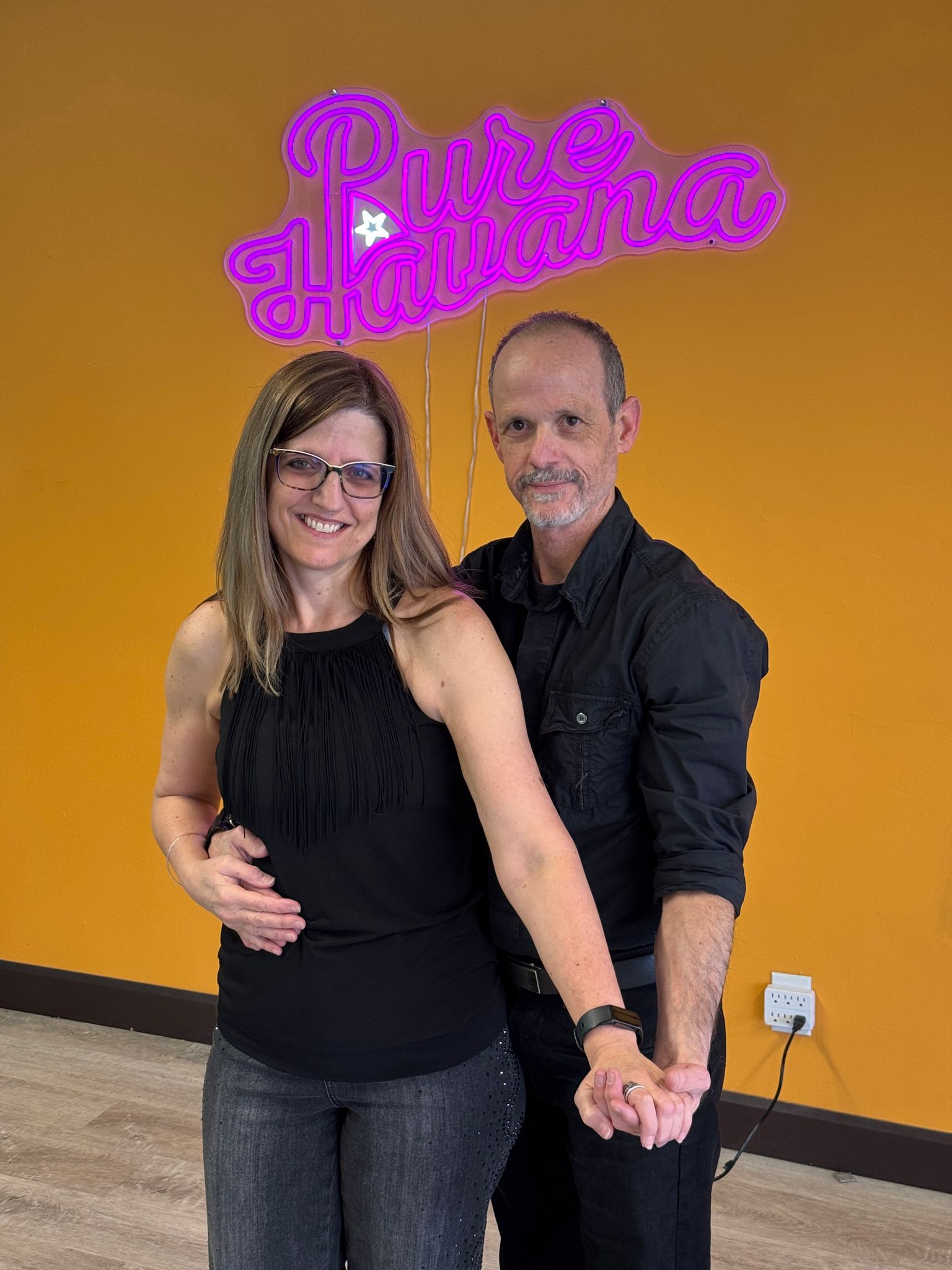

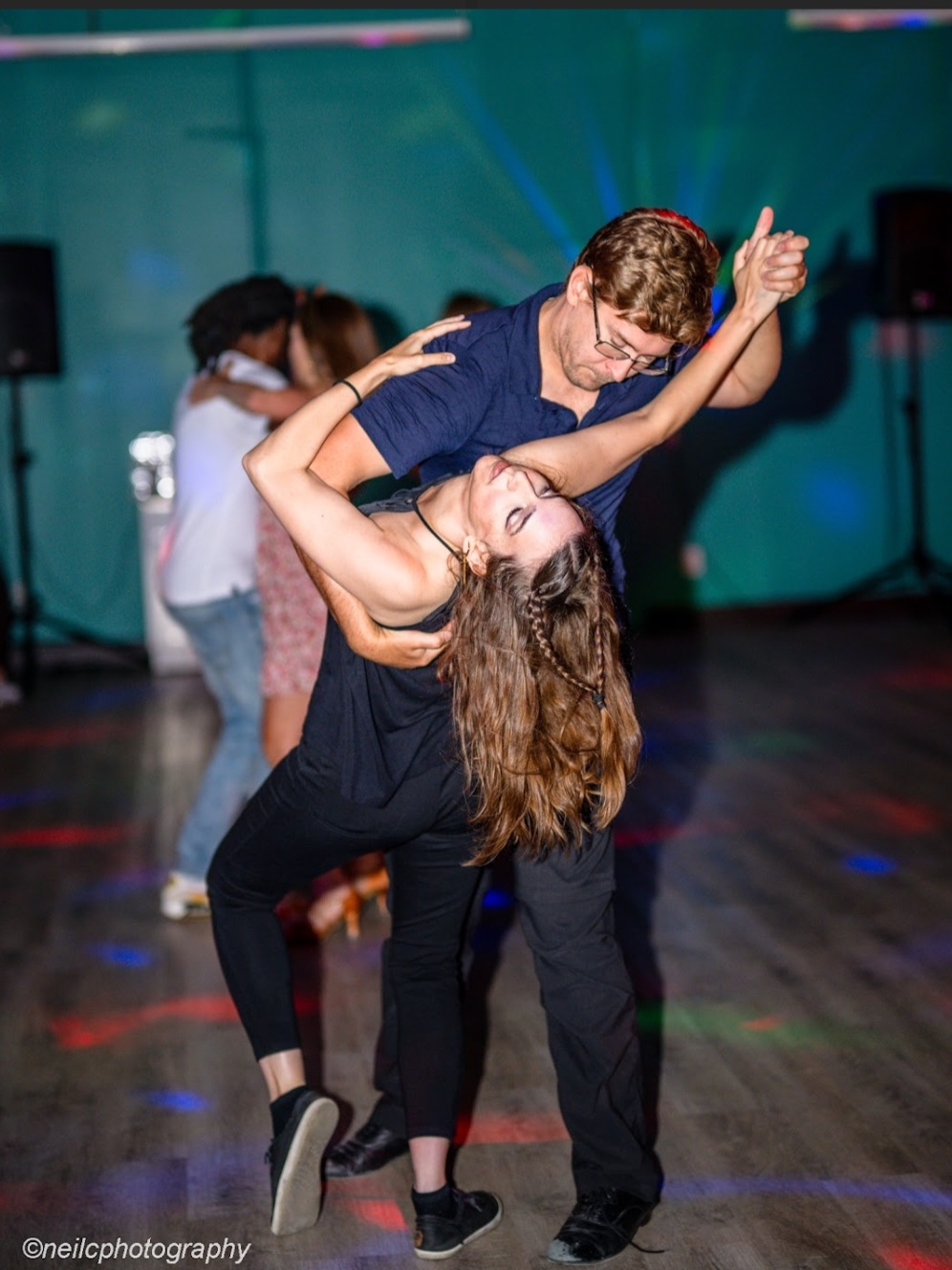
Social dancing is where salsa really comes alive.
There is a big difference between learning a sequence of steps during a class and feeling comfortable when a salsa song starts playing in a real social environment. In class, you know what you’re practicing. During social dancing, there is no predetermined routine. You have different partners, different songs, changing tempos, unexpected moments, and an entire dance floor moving around you.
That’s why I don’t want my students to simply memorize salsa combinations.
I want them to understand how to dance.
Whether someone comes to me from Westboro, Kanata, Centertown, Vanier, Rockcliffe, Lansdowne, Gatineau, Hull QC, or elsewhere in Ottawa, I focus heavily on fundamentals that can actually be used outside the classroom.
For complete beginners, that distinction matters.
Someone searching for salsa dancing near Kanata Ottawa, salsa dancing near me for beginners, salsa dancing Ottawa adults, or best salsa dancing Ottawa may initially believe they need to learn dozens of impressive moves before they’re ready for social dancing.
I teach almost the opposite.
A dancer with a strong basic step, good timing, comfortable partner connection, and the ability to recover can often enjoy social dancing far more than someone who knows many patterns but doesn’t understand the foundation underneath them.
That’s why my salsa teaching starts with the skills that make everything else easier.
Social Salsa Isn’t About Performing a Routine
One of the first ideas I want beginners to understand is that social salsa isn’t choreography.
You aren’t expected to memorize a three minute sequence and reproduce it perfectly.
You’re dancing in the moment.
The music changes.
Your partner changes.
The space available around you changes.
Sometimes a movement works exactly as expected.
Sometimes it doesn’t.
That’s part of the experience.
When students understand this early, salsa becomes much less intimidating.
They stop asking:
“What comes next?”
And they start developing the skills to answer that question themselves.
Why I Put Fundamentals Before Fancy Salsa Moves
I understand why beginners get excited when they see experienced dancers performing turns and creative combinations.
Those movements are fun.
But they’re not where I begin.
Before we worry about making salsa look impressive, I want it to feel comfortable.
That means working on:
- timing
- basic footwork
- weight transfer
- balance
- posture
- partner connection
- lead and follow communication
- awareness of the music
These fundamentals may not look as dramatic as a complicated turn pattern, but they’re what make complicated movements possible later.
More importantly, they’re what make social dancing enjoyable.
The Basic Step Is Much More Important Than Beginners Realize
When someone takes their first salsa lesson, the basic step can seem almost too simple.
It isn’t.
Your basic step is your home base.
It’s where you can return whenever you need to reconnect with the music, reset your position, or decide what you want to do next.
I want students to become so comfortable with their basic that they don’t have to consciously think about every foot placement.
That doesn’t happen instantly.
It develops through purposeful repetition.
We work on timing.
We work on weight transfer.
We work on balance.
We work on making the movement feel natural.
Eventually, the basic stops feeling like something you’re practicing.
It starts feeling like dancing.
Why Weight Transfer Changes Everything
One detail that makes a major difference for beginners is learning how to transfer weight correctly.
A student may know exactly where each foot is supposed to go and still feel uncomfortable if their weight isn’t moving properly.
That’s why I don’t only teach:
“Put your foot here.”
I want students to understand what their body is doing.
When your weight transfer becomes more natural, your movement can become smoother, your balance can improve, and turns become easier to manage.
This is a perfect example of why understanding fundamentals produces better long term results than simply memorizing patterns.
Timing Comes Before Speed
Some beginners hear salsa music and immediately think:
“That’s too fast.”
Usually, speed isn’t the real problem.
The bigger issue is that they haven’t developed enough familiarity with the timing yet.
When you’re trying to consciously process every beat, every step, and every movement simultaneously, even moderate music can feel extremely fast.
That’s why I start by making the timing understandable.
A familiar salsa count can be introduced as:
1, 2, 3… 5, 6, 7.
We connect the count to movement.
We repeat.
Then gradually, students rely less on conscious counting and begin recognizing the rhythm naturally.
Once that happens, the music no longer feels like it’s racing ahead of you.
You start moving with it.
Why I Teach Students to Listen Before Doing More
One of the most useful habits a social dancer can develop is listening.
When beginners become nervous, they often think they need to keep doing something.
Another turn.
Another pattern.
Another movement.
But social dancing doesn’t need to be constantly complicated.
Sometimes the best thing you can do is settle into your basic, listen to the music, connect with your partner, and allow the dance to breathe.
That’s why I want my students to become comfortable with simplicity.
Simple doesn’t mean boring.
Simple done with good timing and connection can feel fantastic.
Social Dancing Becomes Easier When You Stop Chasing Patterns
Memorizing patterns isn’t inherently bad.
Patterns can help students explore movement and develop new options.
The problem begins when a dancer believes the pattern itself is salsa.
If you’ve memorized six combinations but can only perform them in one exact order, what happens when your partner moves differently?
What happens when the dance floor is crowded?
What happens if you forget the third part?
A student who understands fundamentals has options.
They can simplify.
They can return to their basic.
They can adapt.
That’s the kind of dancer I want to develop.
I Teach Leaders to Communicate Clearly
Leading isn’t about pushing someone through a sequence.
It’s communication.
A good leader needs to understand their own timing and movement before they can communicate clearly with someone else.
That’s why I help leaders develop:
- control
- timing
- awareness
- comfortable connection
- clear intention
I want leaders to understand that more force doesn’t create better communication.
Clarity does.
When leading becomes clearer and more relaxed, social dancing becomes much more enjoyable for both partners.
I Teach Followers to Respond Instead of Guess
Followers have a different challenge.
Beginners sometimes believe they need to predict what the leader will do next.
That creates unnecessary tension.
I teach followers to become comfortable responding rather than guessing.
When the connection is clear, you don’t need to know the entire dance before it happens.
You listen through movement.
You respond.
You remain connected to the music.
That makes partner dancing feel much more natural.
Why Westboro Adults Are Drawn to Salsa
I see growing interest in salsa from adults around Westboro Ottawa because people are looking for activities that combine social connection, movement, and personal development.
Salsa provides all three.
You’re learning something.
You’re staying active.
You’re meeting people.
And unlike a one time activity, salsa continues developing with you.
Someone searching for salsa dancing Westboro Ottawa may simply want something new to try after work or on the weekend.
But once they begin developing real dance skills, salsa often becomes much more than an occasional activity.
It becomes part of their social life.
Salsa Dancing Near Kanata Ottawa for Complete Beginners
I also work with people coming from Kanata who have never danced before.
When someone searches for salsa dancing near Kanata Ottawa, one of their biggest questions is often whether the experience will actually be suitable for beginners.
That’s why I make the starting point clear.
You don’t need previous experience.
You don’t need to know salsa music.
You don’t need a collection of dance shoes.
You don’t need to arrive knowing how to move.
That’s what we’re going to work on together.
The fundamentals give complete beginners a clear path forward.
You Don’t Need to Be a Natural Dancer
“I don’t have rhythm.”
“I have two left feet.”
“I’m not coordinated.”
I’ve heard all of these statements many times.
I don’t see them as reasons someone can’t learn salsa.
Coordination develops.
Timing develops.
Musical awareness develops.
Partner connection develops.
These are skills.
The question isn’t whether you already possess every skill required to dance.
The question is whether you’re willing to develop them.
Why Adults Often Learn Better When They Understand the Reason
I don’t want students simply copying me.
I want them to understand what they’re doing.
Adults often respond extremely well when they understand why a movement works.
Why are we changing weight here?
Why does this turn happen on this count?
Why does the connection need to remain comfortable?
Why should we return to the basic after something goes wrong?
Once you understand the reason behind a movement, remembering it becomes easier.
More importantly, adapting it becomes possible.
That’s essential for social dancing.
I Teach Recovery as a Fundamental Salsa Skill
One of the most valuable things I teach isn’t a pattern.
It’s recovery.
You will eventually lose the beat.
Everyone does.
You will forget what you were planning.
You will occasionally misunderstand your partner.
A movement won’t work.
The music may suddenly change.
None of those moments have to ruin the dance.
I teach students to recognize when something isn’t working and comfortably return to something familiar.
Often, that’s simply the basic step.
Find the rhythm.
Relax.
Reconnect.
Continue.
Why Recovery Creates Confidence
Think about what makes social dancing intimidating.
A lot of the fear comes from wondering:
“What happens if I mess up?”
Once you have an answer to that question, the fear loses much of its power.
What happens?
You keep dancing.
That’s confidence.
Not perfection.
Not knowing every possible pattern.
Just knowing that if something unexpected happens, you can handle it.
Learning to Dance With Different Partners Matters
If you only ever dance with one person, you can become familiar with that person’s habits.
That’s comfortable, but it doesn’t necessarily develop adaptability.
Social salsa introduces you to people with different:
- heights
- movement styles
- experience levels
- timing
- connection preferences
Dancing with different partners teaches you to rely on principles instead of memorized responses.
That makes you a much more versatile dancer.
You Don’t Necessarily Need a Partner to Start
Many adults delay salsa because they assume they need someone to register with them.
If you want to learn, you shouldn’t have to wait for someone else’s schedule or confidence.
Coming to salsa on your own can actually help you enter the social side of dancing faster.
You meet people.
You practice with different dancers.
You learn how to adapt.
For someone whose ultimate goal is social salsa, that can be incredibly valuable.
Couples Can Learn the Same Fundamentals Together
Salsa is also a fantastic shared activity for couples.
But I encourage couples not to become overly dependent on one another’s habits.
Both people benefit from understanding their individual fundamentals.
When both partners understand timing, balance, connection, and communication, dancing together becomes much more enjoyable.
You’re not simply memorizing how your partner moves.
You’re both learning how salsa works.
Floor Awareness Is Part of Social Dancing
A classroom gives you space.
A social dance floor may not.
That’s why becoming a good social dancer also means becoming aware of the people around you.
You don’t need enormous movements to have a great dance.
In fact, controlling your movement becomes increasingly important when the floor gets busy.
I want students to understand how to adjust.
A movement that works beautifully with lots of space may need to become smaller when other dancers are nearby.
Adaptability keeps social dancing safer and more enjoyable.
More Moves Don’t Automatically Mean a Better Dance
This is something I want beginners to understand early.
A good social dance doesn’t need dozens of patterns.
You can create an enjoyable dance using relatively simple movements when your:
- timing is comfortable
- connection feels good
- movement is controlled
- attention is on your partner
- musical awareness is developing
I would rather see a student confidently use five things they understand than struggle through twenty things they don’t.
Musicality Begins With Listening
Musicality can sound like an advanced concept, but the foundation begins early.
Before you can express the music, you need to hear it.
I encourage students to become familiar with salsa music outside class too.
Listen without dancing.
Notice repetition.
Notice changes.
Notice when the energy increases or decreases.
You don’t need to understand every instrument immediately.
Simply becoming more familiar with the sound of salsa can make dancing feel much easier.
Why Social Salsa Should Feel Like a Conversation
I often think of partner dancing as a conversation.
The leader isn’t delivering a speech.
The follower isn’t passively waiting.
Both people are participating.
The music is part of the conversation too.
Sometimes the dance is energetic.
Sometimes it’s simple.
Sometimes you pause.
Sometimes something unexpected happens.
When students start thinking this way, they become less obsessed with executing a perfect sequence.
They start actually dancing together.
From Westboro to Centertown, Salsa Creates Connection
Although this article focuses on Westboro and Kanata, I teach adults from throughout the Ottawa region.
That includes people from Centertown, Vanier, Rockcliffe, Lansdowne, Gatineau, and Hull QC.
One of the best parts of salsa is seeing people who might never otherwise meet sharing the same dance floor.
Different neighborhoods.
Different careers.
Different backgrounds.
Different experience levels.
Everyone is connected by the same music.
Preparing for Salsa Dancing in Ottawa on Saturdays
Many adults specifically search for salsa dancing Ottawa Saturday because weekends give them more freedom to explore social activities.
If your goal is eventually to enjoy a Saturday salsa experience confidently, fundamentals matter.
You don’t need to arrive knowing every movement.
You need enough confidence to participate.
That means being able to:
- hear the rhythm
- maintain your basic
- connect with a partner
- use a few movements comfortably
- recover when necessary
Once those skills exist, a social dance environment becomes much less intimidating.
Midweek Salsa Can Help Build Consistency
Others search for salsa dancing Ottawa Wednesday because they want something social during the week.
A regular midweek class can be an excellent way to develop consistency.
Instead of trying to learn everything during occasional sessions, you build your skills gradually.
Week after week.
Your timing improves.
Your movement becomes more natural.
Your confidence develops.
Consistency often beats intensity when you’re learning to dance.
What About Salsa Dancing at Ottawa City Hall?
People searching for salsa dancing City Hall Ottawa are often already curious about social and community salsa opportunities.
That’s great.
Public and social dance environments can be exciting goals for beginners.
But they’re much more enjoyable when you’ve developed a foundation first.
Rather than standing at the edge of the dance floor wondering whether you’re ready, I want my students to reach the point where they can hear familiar salsa music and think:
“I know enough to enjoy this.”
You don’t have to be advanced.
You simply need confidence in the fundamentals.
Free Salsa Events Can Be a Great Way to Practice
Searches for free salsa Ottawa and free salsa dancing Ottawa show that many people are interested in experiencing salsa socially before making it a bigger part of their lives.
Community opportunities can be a fun way to experience the dance.
But again, having foundational skills changes the experience.
Instead of trying to copy whatever someone nearby is doing, you understand your timing.
You know your basic.
You understand partner connection.
That allows you to participate rather than simply observe.
From Salsa Class to Latin Dance Club Ottawa
As students improve, some naturally become curious about a Latin dance club Ottawa experience.
This is another reason I teach practical social skills.
A club environment isn’t the same as a classroom.
The music doesn’t stop so someone can explain what happened.
There’s less space.
People have different experience levels.
You need to adapt.
The stronger your fundamentals are, the easier that transition becomes.
Salsa and Bachata Can Develop Different Skills
Many students who start salsa eventually become interested in bachata.
They begin searching for beginner bachata classes Ottawa, bachata classes Ottawa adults, or best bachata classes Ottawa.
I encourage students to explore both when they’re interested.
Salsa and bachata provide different musical and movement experiences, but both can strengthen your comfort with partner dancing.
Learning multiple styles can also make the Latin dance community feel much more accessible because you have more opportunities to participate.
Private Salsa Lessons Can Strengthen Your Fundamentals Faster
Some students want additional individual attention.
That’s where private salsa lessons can be especially valuable.
In private coaching, I can focus directly on what is holding you back.
Maybe your timing needs attention.
Maybe you’re struggling with turns.
Maybe your lead feels unclear.
Maybe following feels confusing.
Maybe you want to prepare for your first social.
Instead of working around the needs of an entire group, we can focus specifically on your development.
That can be particularly useful for adults with specific goals or limited practice time.
Private Salsa and Bachata Lessons for Couples
Couples may also benefit from personalized instruction.
If you’re learning because you want a shared hobby, preparing for an event, or simply want dedicated time together, private coaching allows us to build around both partners.
We can identify individual strengths and challenges while also developing the connection between you.
The objective isn’t to make one partner responsible for the other’s dancing.
It’s to help both people become more capable dancers.
How I Know a Beginner Is Becoming Social Dance Ready
It’s not when they learn their tenth combination.
I look for different signs.
Can they hear the rhythm without constant help?
Can they maintain a comfortable basic?
Can they dance with someone new?
Can they stay relaxed when something goes wrong?
Can they use simple movements without rushing?
Are they beginning to enjoy the music instead of concentrating exclusively on their feet?
Those are meaningful signs of progress.
When Students Stop Thinking About Every Step
There comes a moment in many students’ development when the dance begins changing.
At first:
“One, two, three…”
“Which foot?”
“What comes next?”
Then gradually, those thoughts become quieter.
The movement starts happening more naturally.
Students look up.
They smile.
They start paying attention to their partner.
They hear more of the music.
That’s when salsa begins feeling less like a lesson and more like a dance.
Why Confidence Comes From Understanding, Not Showing Off
I don’t want beginners measuring themselves against the most experienced person on the dance floor.
That’s not useful.
Your progress should be measured against where you started.
Can you hear something in the music today that you couldn’t hear a month ago?
Can you recover more easily?
Do you feel more relaxed with a partner?
Can you dance through an entire song?
Those improvements matter.
Confidence grows when you recognize that you’re becoming more capable.
What I Want Every Beginner From Kanata and Westboro to Know
If you’re searching for salsa dancing near Kanata Ottawa, salsa dancing Westboro Ottawa, or salsa dancing near me for beginners, you don’t need to prepare yourself before taking a beginner class.
The class is the preparation.
Come without experience.
Come without knowing the count.
Come without a partner if necessary.
Come nervous.
That’s okay.
We’ll build from there.
My Goal Is to Make Salsa Useful Outside the Classroom
Ultimately, I don’t teach fundamentals because I want students to spend forever practicing fundamentals.
I teach them because fundamentals create freedom.
When your basic is comfortable, you can focus on your partner.
When your timing is reliable, you can listen to the music.
When your connection is clear, you can communicate.
When you know how to recover, you don’t fear mistakes.
When you understand how movements work, you can adapt.
That’s what makes social dancing easier.
Ready to Build Your Salsa Foundation?
If you’ve been searching for salsa dancing near Kanata Ottawa, salsa dancing near me for beginners, salsa dancing Ottawa adults, best salsa dancing Ottawa, salsa dancing Ottawa Saturday, salsa dancing Ottawa Wednesday, or opportunities to become comfortable with social salsa, I want you to know that you don’t need dozens of moves to begin.
You need a foundation you can trust.
Whether you’re coming from Westboro, Kanata, Centertown, Vanier, Rockcliffe, Lansdowne, Gatineau, Hull QC, or elsewhere in Ottawa, that’s exactly what I want to help you build.
We’ll work on your timing.
We’ll strengthen your basic.
We’ll develop partner connection.
We’ll make mistakes and learn how to recover from them.
And we’ll gradually prepare you for the moment when salsa stops feeling like something you’re studying and starts feeling like something you genuinely know how to enjoy.
Because my goal isn’t simply to teach you what to do during a salsa class.
My goal is to give you the fundamentals that make you excited to step onto a real social dance floor and actually dance.